Rutgers physicist wins prestigious Kavli Prize for groundbreaking nanoscience research
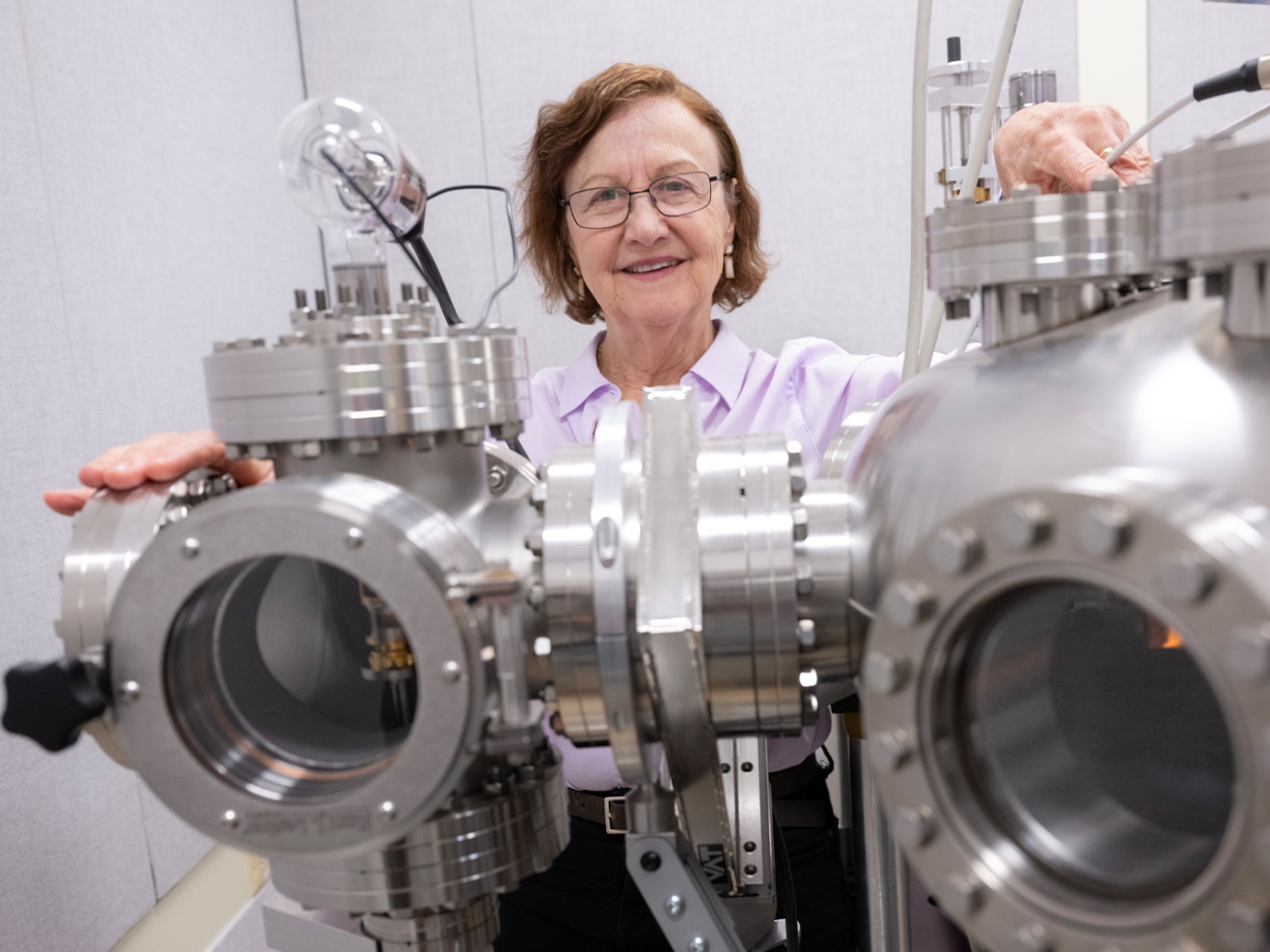
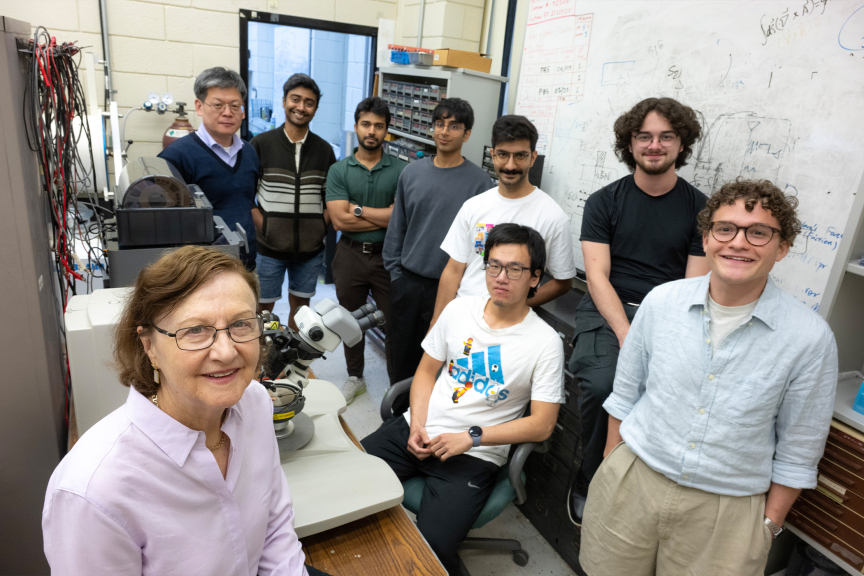
Rutgers physicist Eva Andrei is one of only 10 scientists worldwide to be awarded a 2026 Kavli Prize.
More Stories




A Rutgers physicist has been awarded one of the world's most prestigious science honors for research that could lead to ultrafast computer chips, highly accurate medical imaging sensors and more energy-efficient power grids.
Eva Andrei, a Board of Governors Professor in the Department of Physics and Astronomy, is one of only 10 scientists worldwide to be awarded a 2026 Kavli Prize. Awarded every two years, the Kavli Prize recognizes discoveries in astrophysics, nanoscience and neuroscience, with laureates in each field sharing a $1 million prize.
Andrei will share the nanoscience prize with Pablo Jarillo-Herrero of the Massachusetts Institute of Technology and Allan H. MacDonald of the University of Texas at Austin for foundational work that established the field of twistronics — a combination of the words "twist" and "electronics."
"The Kavli award is an exceptional recognition of Eva Andrei's accomplishments, which have established a new research field in nanoscale quantum physics and are inspiring scientists across other fields," said John P. Hughes, chair of Rutgers' Department of Physics and Astronomy. "It is a testament to her creativity, excellent scientific judgment and experimental skills."
The laureates will be recognized in September during a ceremony in Oslo, Norway, presided over by the Norwegian royal family. The Kavli Prize is a partnership among the Norwegian Academy of Science and Letters, the Norwegian Ministry of Education and Research and the Kavli Foundation.
Andrei's early research helped lay the groundwork for the field of twistronics. Her lab was the first to show that stacking two sheets of graphene — pure carbon arranged in a honeycomb pattern just one atom thick — with a slight twist between them could dramatically alter their electronic properties.
With that microscopic twist, scientists can tune a single material from a metal to an insulator to a superconductor simply by adjusting the voltage — a level of control previously thought impossible.
"Imagine a single material that you could reprogram with a battery," Andrei said. "Turn the voltage up a little and it becomes a superconductor. Turn it differently and it becomes an insulator or a magnet. That's what magic-angle twisted graphene lets us do. It's a kind of quantum Swiss Army knife, and the twist is what makes it possible."
Scientists have only begun to explore the possibilities of twisted materials, Andrei said, adding that twistronics is opening new ways to answer some of physics' deepest questions while potentially leading to entirely new kinds of devices.
"This recognition reflects the work of every student and postdoc who has passed through our group, and especially that of my close collaborator Dr. Guohong Li, who has been an indispensable scientific partner since the earliest days of our moiré discoveries," said Andrei, who earned her doctoral degree in physics from Rutgers in 1982 and has been a faculty member at the university ever since. "Rutgers has been both my scientific home and the place where this field took root — and that means everything to me."