Newburgh dog owner says city euthanized family pet after she couldn’t pay $3K in fees
Owner says she repeatedly sought a payment plan as boarding and veterinary costs mounted. City says a judge ordered the dog put down after a dangerous dog proceeding.
More Stories


A Newburgh woman says the city euthanized her 12-year-old family dog after she couldn’t afford nearly $3,000 in boarding and veterinary costs that accumulated while the animal was being held following a neighborhood dog incident.
Lisa Dedrick says her front door had been broken, allowing her pit bull, Luna, and her other dog, Onyx, to get loose while she was paying for her daughter’s cab. She says the dogs then got into a minor altercation with a smaller dog being walked nearby.
“I’m not saying it was right,” Dedrick told News 12. “But I don’t think anybody should’ve paid their life for it.”
Dedrick says Luna had never been involved in a fight before. She says Onyx was involved in the altercation for only seconds and Luna was mostly barking and growling. She says none of the dogs were injured and that the person walking the other dog suffered what she describes as only a minor puncture wound and scratch on her leg. She also questions whether Luna caused those injuries, arguing they appeared more consistent with a smaller dog’s nail scratches than a pit bull’s dog bite.
She says the City of Newburgh Animal Control took her dogs because their rabies vaccinations were overdue. Dedrick also says Luna’s dog license still listed an old address. She says the dogs were then ordered into a 10-day quarantine instead of being allowed to quarantine at home.
Dedrick says both dogs could have safely remained with her under quarantine restrictions and believes Luna’s breed unfairly influenced what happened. According to Dedrick, both dogs were boarded at Flannery Animal Hospital, where she says daily boarding charges, veterinary care and other fees quickly added up.
She says she spent nearly $1,000 — all of her savings — to get Onyx back, but couldn’t afford to retrieve Luna as the bill for boarding, veterinary care and other fees climbed to nearly $3,000.
“I was calling animal control every day,” she said. “I know it costs money to house them at Flannery every day and I don’t have the money for this.”
Dedrick says the city would not allow Luna to be released until she first appeared in court. She says she appeared twice in City of Newburgh Court, most recently on July 16, when she offered to pay $900 toward Luna’s bill and requested a payment plan. She claims she was told the bill had to be paid in full before Luna would be released.

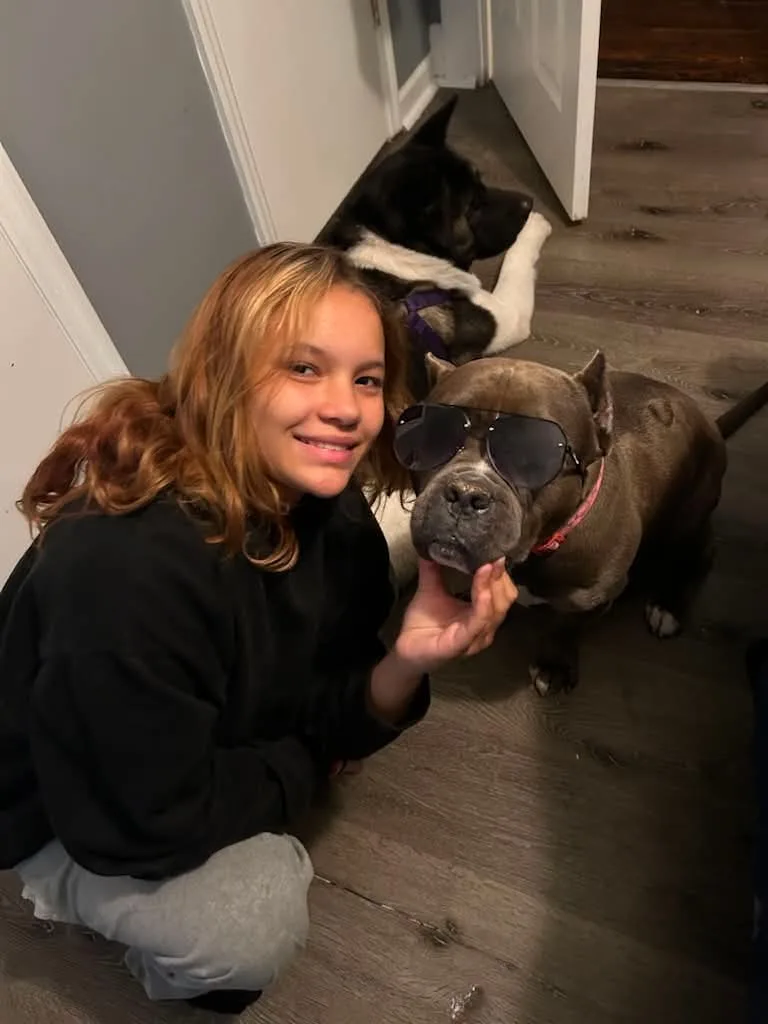
News 12 confirmed with the City of Newburgh Court clerk that a judge signed an order on July 16 authorizing Luna to be “humanely euthanized.” Dedrick says she later learned Luna was put down that same day before she could raise the remaining money.
News 12 repeatedly requested comment from the city beginning Monday but did not receive a response. Instead, police issued a press release late Friday afternoon — hours after News 12’s initial report on Dedrick’s allegations. In it, the city detailed a much different account and said Luna had a documented bite history and that the decision to euthanize the dog followed a court-ordered dangerous dog proceeding.
According to the city, officers responded on May 18 after a 17-year-old girl walking her family’s dog on a leash was severely bitten by Luna, suffering what it describes as a puncture wound and laceration to her thigh. The city says its investigation determined Onyx was not involved in the attack.
The city also says Dedrick stipulated in court that Luna met the legal definition of a dangerous dog. According to the press release, a judge ordered the dog put down, terminated Dedrick’s ownership rights and determined Luna was not eligible for adoption because of what the city describes as the dog’s documented bite history and aggressive behavior.
The case has also drawn concern from Hudson Valley SPCA President Joan Kay, who believes there were other options.
“This case is particularly alarming to me because this dog was 12 years old,” Kay said. “She had a loving home. She had children waiting for her to come home.”
Kay says Luna could have completed the required quarantine at home while being walked with a muzzle, avoiding hundreds or even thousands of dollars in boarding and veterinary costs.
“The fees didn’t have to exist,” Kay said.
Kay says Dedrick could have been allowed to update the dogs’ rabies vaccinations through several local animal clinics or commercial businesses that offer veterinary care before those costs accumulated. Kay also says she has worked with other municipalities that transfer dogs with bite histories to rescues or adoptive homes rather than euthanizing them.
While Kay says every dangerous dog case is different, she hopes to work with the City of Newburgh to explore more humane alternatives to euthanasia in future cases.