NJ towns on alert amid recent black bear sightings
Residents are urged to secure trash cans and avoid leaving food out.
More Stories




Officials in North Jersey are urging residents to be vigilant after recent black bear sightings in residential neighborhoods.
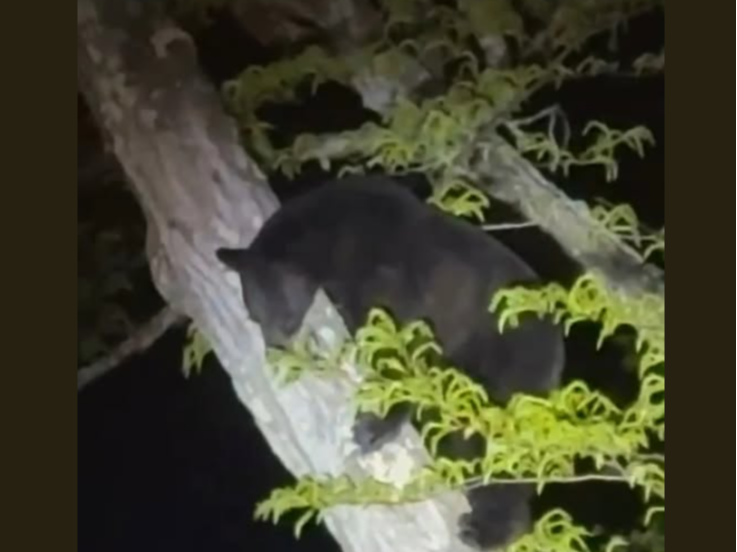
Just before 11 p.m. Tuesday, Teaneck police posted on Facebook, stating they are "aware of a black bear in the area of the Teaneck Armory. We will continue to monitor it as it travels through Teaneck." The bear was seen sleeping in a tree.
"Please do not approach or disturb it, as it is natural wildlife for our area," Teaneck police said.
On Tuesday morning, Englewood Mayor Michael Wildes posted a video on social media showing a black bear walking in front of a home on Pleasant Avenue. The mayor said local school officials were being contacted, and police patrols would be asked to "focus on the routes students use to walk to school."
Prior to that, on April 21, Englewood officials also warned of a black bear making its way to East Palisade and Summit avenues.
On Monday morning, Cresskill Mayor John Morgan alerted residents to a black bear spotted crossing from Churchill Road to Westervelt Place toward Hillside Avenue.
"Patrols were increased in the area, with no further sightings. Schools and crossing guards were notified. The Cresskill Police Department is aware and monitoring," Morgan said on social media.
Another bear was spotted farther south in Essex County a week ago. West Orange officials posted on Facebook that there had been sightings in the area.
According to the New Jersey Department of Fish and Wildlife, black bears are the largest land mammal in the state, and their population is currently thriving. Although they are not true hibernators, black bears enter a period of dormancy during the colder months but may leave their dens to search for food on milder days.
"Generally, bears tend to be wary of humans. Residents may observe bears near their homes. It is important not to leave out any food that may encourage bears to linger in residential areas," the NJDEP says.
Though more common in wooded areas in the northern part of the state, black bears have been spotted in all 21 New Jersey counties, the Department of Fish and Wildlife said.
The Department of Fish and Wildlife said residents should use bear-resistant trash cans or store garbage in containers with tight-fitting lids and, whenever possible, keep them in a location "where bears are unlikely to see or smell them, such as the inside wall of your garage, in the basement, a sturdy shed or other secure area."
The NJDEP also said people should avoid feeding bears, which is illegal and can carry fines of up to $1,000.