What to expect in the mid-April night sky
Starting this weekend the moon pairs up with two of the brightest planets in our night sky – Venus and Jupiter.
More Stories




The moon has been in the spotlight all month long and the trend continues.
Starting this weekend the moon pairs up with two of the brightest planets in our night sky – Venus and Jupiter.
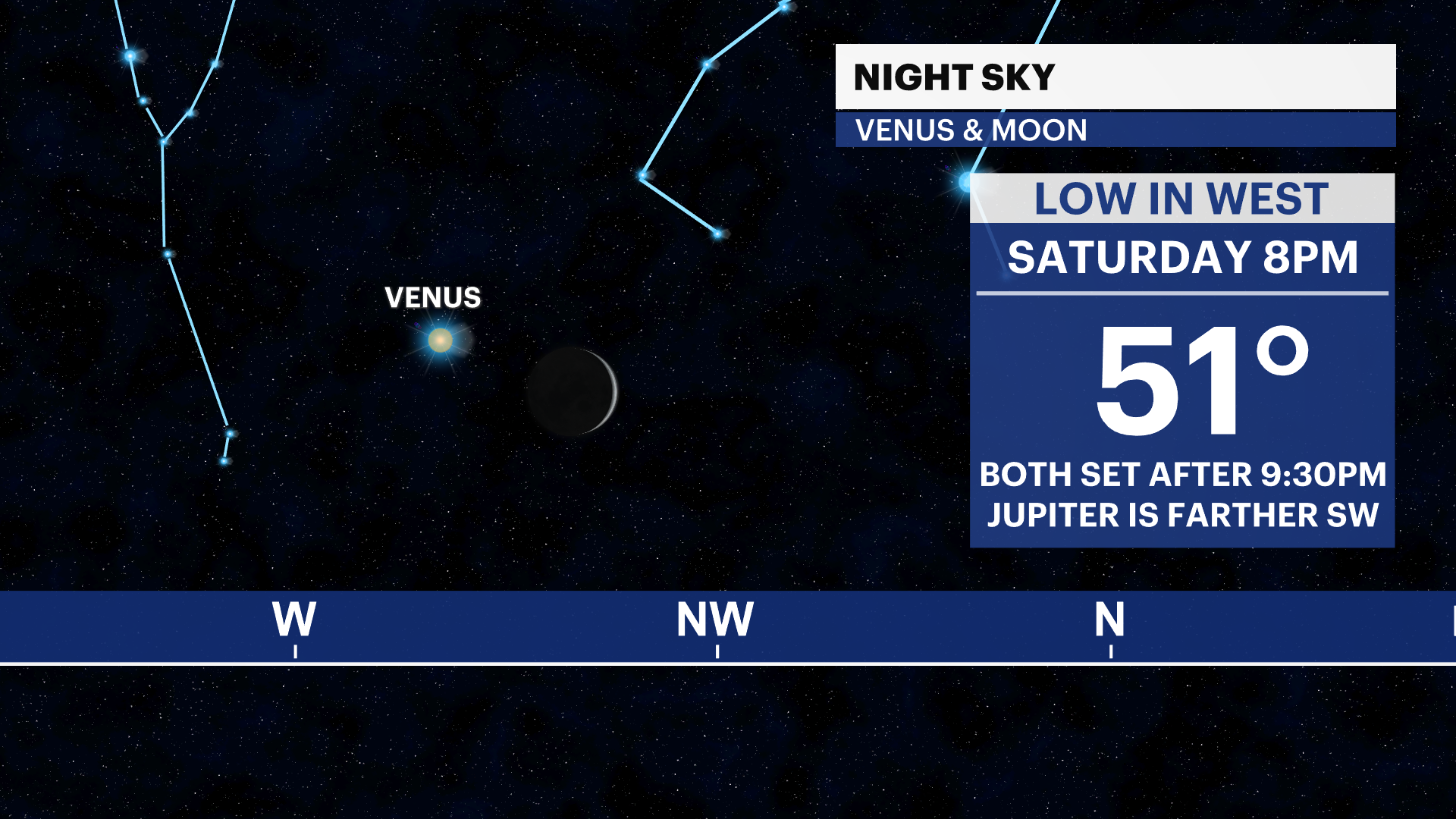
Venus is up first, as it pairs nicely with the newly thin crescent moon in the evening sky on Saturday. They will both be low in the western sky and set soon after 9:30 p.m., so get out early!
The pair are also near each other again on Sunday night, but starting Monday the moon heads higher in the sky to meet up with Jupiter on Wednesday.
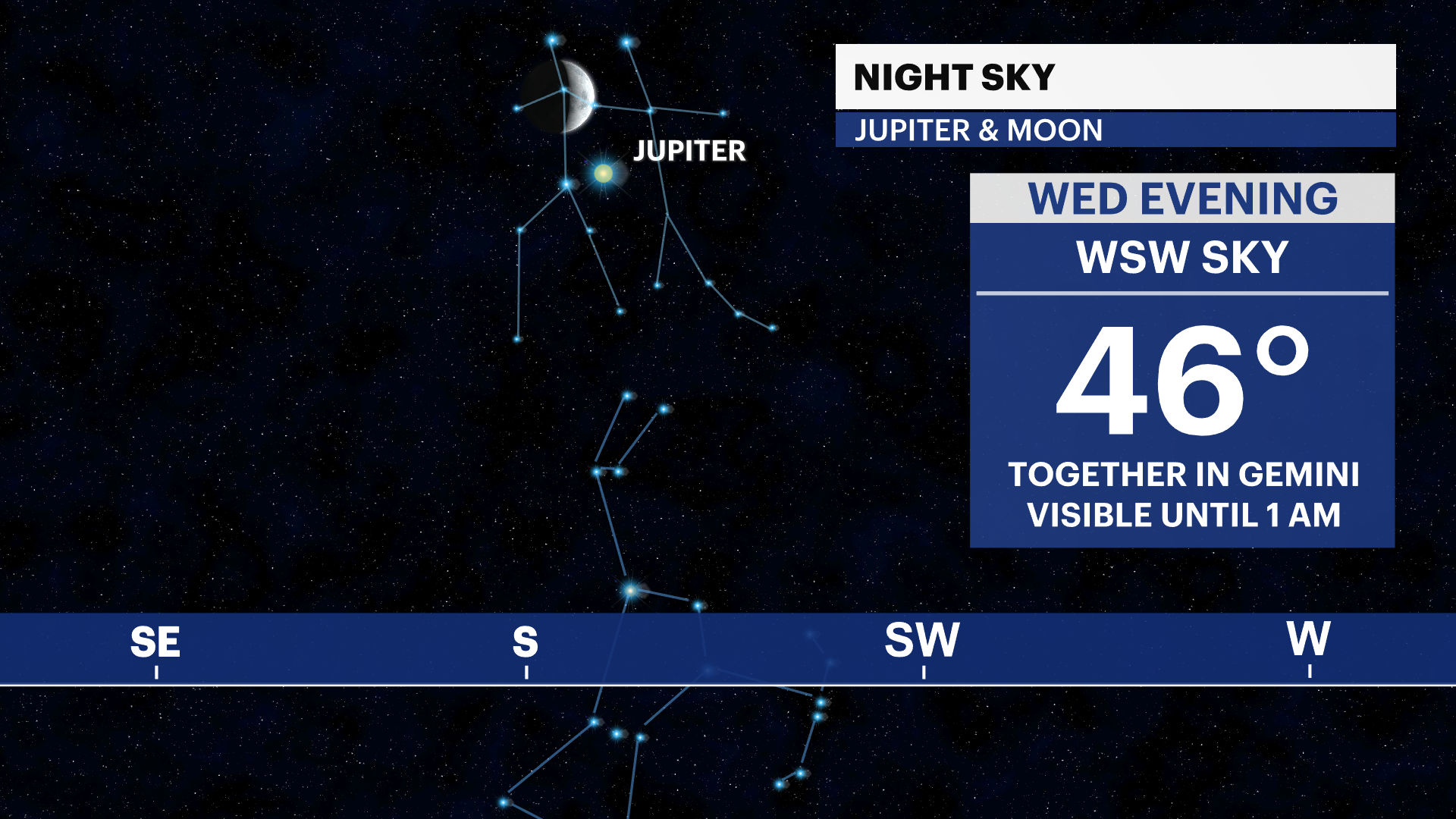
Jupiter shines brightly in the constellation Gemini and by the middle of next week, the weather looks much more favorable for viewing. They will both appear higher in the sky and will stay out longer, setting by 1:30 a.m. By Wednesday, the moon will be a larger waxing crescent heading toward first quarter just two days later.
The Lyrid meteor shower returns to the night sky and peaks on Tuesday night into early Wednesday morning (Apr 21-22). The moon will kindly set after 1:30 a.m. and won’t get in the way of viewing the meteors.
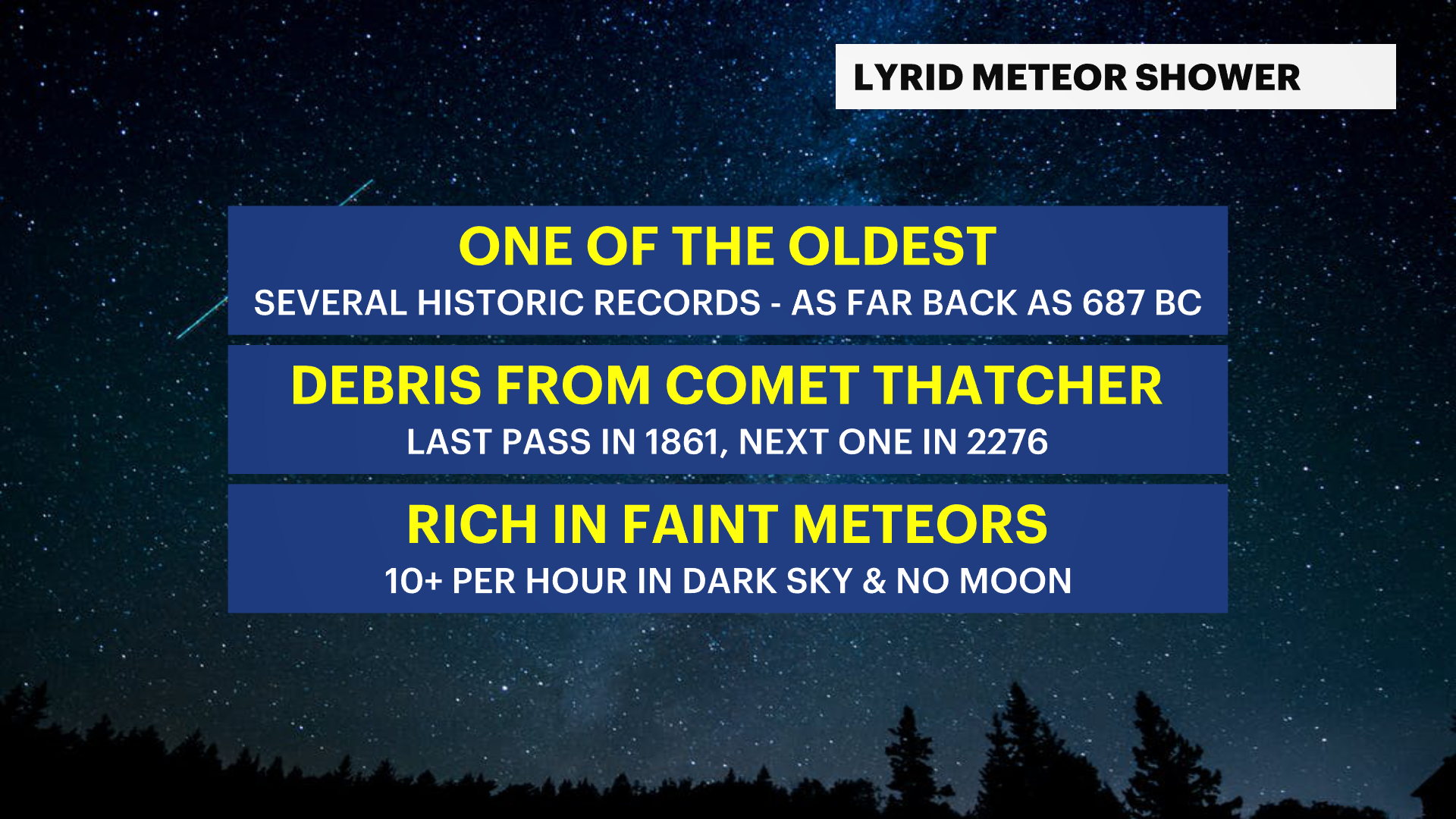
The Lyrids are one of the oldest known meteor showers, with historical records dating as far back as 687 BC in China. There is also a record of them in the United States in Richmond, Virginia from 1803.
This shower has its origins from the Comet Thatcher. The comet was discovered back in 1861 when it last came through our solar system. It’s a long period comet that returns every 415 years
Lyra, the constellation, will be in the northeastern sky after midnight but you can really see the meteors anywhere. Lyra represents a musical instrument known as the lyre, it was first cataloged by Ptolemy, the astronomer, in the second century. Vega is the brightest star in the northern hemisphere and is part of this constellation.